Contoh soal matematika kelas 1 sd dalam bahasa inggris
Early Math Foundations
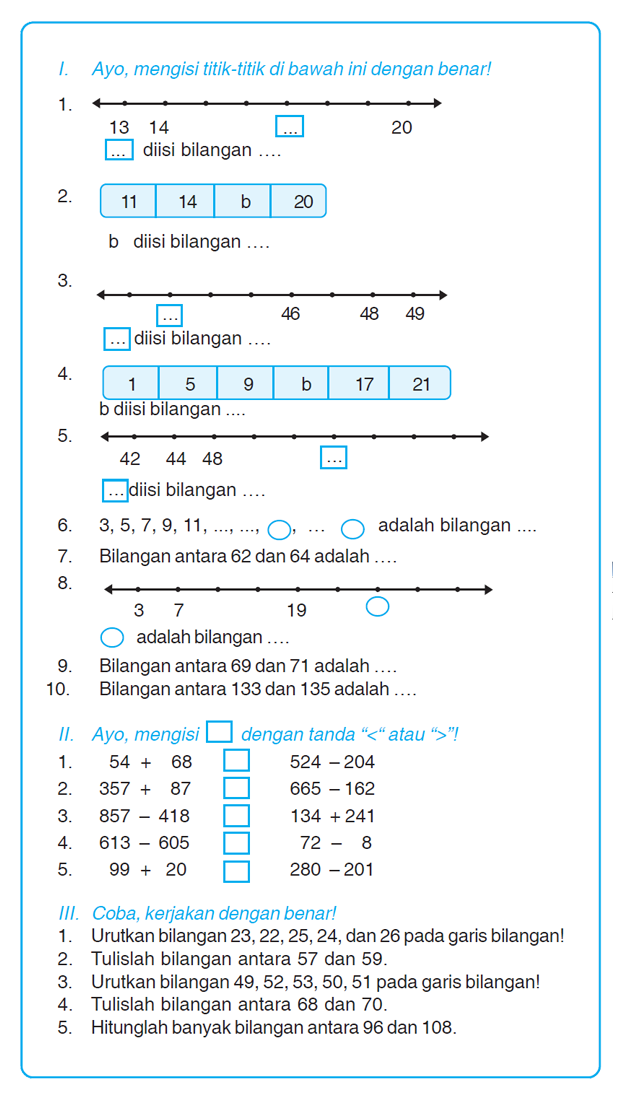
Mathematics is a fundamental subject that lays the groundwork for a child’s academic journey. For first-graders (SD Kelas 1), the introduction to mathematical concepts is crucial. This stage focuses on building a strong understanding of basic arithmetic, number sense, and simple problem-solving skills. The goal is not just memorization but fostering a genuine comprehension of numbers and their relationships. This article aims to provide a comprehensive overview of common Grade 1 math topics and offer a variety of example problems with detailed explanations, designed to be clear and engaging for young learners.
I. Understanding the Outline
To effectively teach and learn Grade 1 mathematics, a structured approach is essential. The curriculum typically covers several key areas:
- A. Number Recognition and Counting: This is the bedrock of early math education. Children learn to identify numerals, understand their value, and count objects.
- B. Addition and Subtraction (within 20): Introducing the fundamental operations of addition and subtraction is a major milestone. This involves understanding concepts of "adding more" and "taking away."
- C. Comparing Numbers: Children learn to determine if one number is greater than, less than, or equal to another.
- D. Basic Geometry and Measurement: This section introduces simple shapes and concepts of length and size.
- E. Data Analysis and Probability (Introduction): Very basic introductions to collecting and interpreting simple data.
II. Number Recognition and Counting
This is where the mathematical journey for first-graders begins. Children are introduced to the symbols representing numbers and the act of enumerating objects.
-
Objective: To recognize numerals from 0 to 20, count objects accurately, and understand the concept of one-to-one correspondence.
-
Example Problems:
-
Problem: Look at these objects. Can you count them?
(Imagine a picture of 7 apples)
Answer: There are 7 apples.
Explanation: This problem encourages children to visually identify and count individual items. They can point to each apple as they say the number. -
Problem: Write the number that comes after 5.
Answer: 6
Explanation: This tests their understanding of number sequence. They should know that 6 follows 5 in the counting order. -
Problem: Circle the group that has more candies.
(Imagine two groups of candies. Group A has 4 candies, Group B has 6 candies.)
Answer: Group B
Explanation: This introduces the concept of comparison. Children need to count both groups and then determine which number is larger. -
Problem: How many fingers are on one hand?
Answer: 5
Explanation: This problem connects abstract counting to a familiar physical object. It reinforces the number 5. -
Problem: Trace the number 12.
(The number 12 is presented with dotted lines for tracing.)
Answer: The child traces the numeral 12.
Explanation: This focuses on numeral formation and recognition. It helps develop fine motor skills along with number identification. -
Problem: What is the missing number? 3, 4, __, 6, 7
Answer: 5
Explanation: This assesses their understanding of number patterns within a sequence. -
Problem: Count the stars in the sky.
(Imagine a picture with 9 stars.)
Answer: 9
Explanation: Similar to the apples, this requires visual counting and numeral association. -
Problem: Write the number that comes before 10.
Answer: 9
Explanation: This tests understanding of the number preceding a given number. -
Problem: Match the numeral to the correct number of objects.
(Imagine a numeral "8" on one side and a picture of 8 balls on the other.)
Answer: The numeral 8 is matched with the picture of 8 balls.
Explanation: This reinforces the connection between the abstract numeral and its concrete quantity. -
Problem: Which number is bigger: 15 or 11?
Answer: 15
Explanation: This is a direct comparison of two-digit numbers within the Grade 1 scope, focusing on place value implicitly (the tens digit).
-
III. Addition and Subtraction (within 20)
Once children are comfortable with numbers, they are introduced to the basic operations of addition and subtraction. The focus is on understanding the concepts and solving problems within the range of 1 to 20.
-
Objective: To understand the meaning of addition (combining) and subtraction (taking away), and to solve simple addition and subtraction problems.
-
Example Problems:
-
Problem: There are 3 red balloons and 2 blue balloons. How many balloons are there in total?
Answer: 3 + 2 = 5 balloons.
Explanation: This is a simple addition problem. Children can visualize the balloons being combined. Using manipulatives like blocks or fingers can be very helpful here. -
Problem: You have 7 cookies. You eat 3 of them. How many cookies are left?
Answer: 7 – 3 = 4 cookies.
Explanation: This is a subtraction problem. The concept of "taking away" is central. Children can imagine removing cookies from a plate. -
Problem: What is 5 + 4?
Answer: 9
Explanation: Direct addition problem. They can count on from 5: 6, 7, 8, 9. -
Problem: What is 10 – 6?
Answer: 4
Explanation: Direct subtraction problem. They can start at 10 and count backward 6 times, or think of what number added to 6 makes 10. -
Problem: Sarah has 8 pencils. Her friend gives her 5 more pencils. How many pencils does Sarah have now?
Answer: 8 + 5 = 13 pencils.
Explanation: This is a word problem involving addition. It requires translating the story into a mathematical equation. -
Problem: There were 12 birds on a tree. 4 birds flew away. How many birds are left on the tree?
Answer: 12 – 4 = 8 birds.
Explanation: Another word problem, this time involving subtraction. The phrase "flew away" signifies taking away. -
Problem: Find the missing number: 7 + ___ = 10
Answer: 3
Explanation: This is a missing addend problem. Children need to figure out what number, when added to 7, results in 10. -
Problem: Find the missing number: 15 – ___ = 9
Answer: 6
Explanation: This is a missing subtrahend problem. They need to determine what number subtracted from 15 leaves 9. -
Problem: What is the sum of 6 and 7?
Answer: 6 + 7 = 13
Explanation: "Sum" is a key vocabulary word for addition. -
Problem: What is the difference between 14 and 5?
Answer: 14 – 5 = 9
Explanation: "Difference" is a key vocabulary word for subtraction.
-
IV. Comparing Numbers
This skill helps children develop a sense of magnitude and order among numbers.
-
Objective: To use comparison symbols (<, >, =) to compare numbers and understand the concepts of "greater than," "less than," and "equal to."
-
Example Problems:
-
Problem: Fill in the blank with >, <, or =.
5 ___ 8
Answer: 5 < 8
Explanation: 5 is less than 8. The mouth of the symbol points to the larger number. -
Problem: Fill in the blank with >, <, or =.
10 ___ 10
Answer: 10 = 10
Explanation: Both numbers are the same, so they are equal. -
Problem: Fill in the blank with >, <, or =.
12 ___ 9
Answer: 12 > 9
Explanation: 12 is greater than 9. -
Problem: Circle the smallest number: 7, 11, 3, 15
Answer: 3
Explanation: Children need to scan the list and identify the number with the least value. -
Problem: Circle the largest number: 18, 9, 14, 10
Answer: 18
Explanation: Similar to the previous problem, but identifying the number with the greatest value. -
Problem: Write the numbers in order from least to greatest: 6, 1, 9, 4
Answer: 1, 4, 6, 9
Explanation: This requires arranging a set of numbers in ascending order. -
Problem: Write the numbers in order from greatest to least: 13, 17, 10, 15
Answer: 17, 15, 13, 10
Explanation: This requires arranging a set of numbers in descending order. -
Problem: Which number is greater, 16 or 19?
Answer: 19
Explanation: Direct comparison focusing on which number has a higher value. -
Problem: Which number is smaller, 11 or 8?
Answer: 8
Explanation: Direct comparison focusing on which number has a lower value. -
Problem: Is 14 equal to 40? (Yes/No)
Answer: No
Explanation: This tests the understanding of equality and the distinct values of numbers, even if they share digits.
-
V. Basic Geometry and Measurement
This introduces children to the visual world of shapes and the concept of size.
-
Objective: To identify common 2D shapes and understand basic measurement concepts like length.
-
Example Problems:
-
Problem: What shape is a stop sign?
Answer: Octagon (or a shape with 8 sides, but octagon is the specific term). For Grade 1, "shape with 8 sides" is also acceptable.
Explanation: This connects geometric shapes to real-world objects. -
Problem: Name this shape: (Picture of a square)
Answer: Square
Explanation: Identifying a basic 2D shape. -
Problem: Name this shape: (Picture of a circle)
Answer: Circle
Explanation: Identifying another basic 2D shape. -
Problem: Which is longer: a pencil or an eraser?
Answer: A pencil
Explanation: This introduces the concept of comparing lengths. -
Problem: How many sides does a triangle have?
Answer: 3
Explanation: This focuses on the properties of a specific shape. -
Problem: What shape has 4 equal sides and 4 corners?
Answer: Square
Explanation: This describes a shape by its attributes. -
Problem: What shape is like a wheel?
Answer: Circle
Explanation: Relating a shape to a familiar object with similar form. -
Problem: Is a door taller or shorter than a refrigerator?
Answer: A door is usually shorter than a refrigerator (though this can be context-dependent, the general understanding is what’s being tested).
Explanation: Comparing heights of common objects. -
Problem: Name a shape that has no corners.
Answer: Circle
Explanation: Understanding the absence of specific geometric features. -
Problem: Which is heavier: a feather or a book?
Answer: A book
Explanation: Introducing the concept of weight comparison, though not strictly measurement of length.
-
VI. Data Analysis and Probability (Introduction)
At this level, data analysis is very simple, often involving sorting and counting.
-
Objective: To collect and organize simple data, and answer basic questions about the data.
-
Example Problems:
-
Problem: Look at the pets in the picture. How many cats are there?
(Imagine a picture with 3 cats, 2 dogs, and 1 bird.)
Answer: 3 cats.
Explanation: Simple counting from a visual representation. -
Problem: In the same picture, how many dogs are there?
Answer: 2 dogs.
Explanation: Another simple counting exercise from the visual data. -
Problem: Which pet is there the most of?
Answer: Cats
Explanation: Comparing the counts from the previous questions to find the highest number. -
Problem: If you pick one fruit from a bag with 3 apples and 1 orange, are you more likely to pick an apple or an orange?
Answer: An apple
Explanation: This is a very basic introduction to probability. The higher quantity makes it more likely. -
Problem: Sort these toys into two groups: cars and dolls.
(Imagine a list of toys: car, doll, car, doll, car)
Answer: Cars: 3, Dolls: 2
Explanation: Grouping similar items together.
-
Conclusion
The Grade 1 mathematics curriculum is designed to build a strong foundation for future learning. By engaging with a variety of problems that cover number recognition, counting, basic operations, comparison, geometry, and introductory data analysis, young learners develop essential mathematical skills and a positive attitude towards the subject. The examples provided here illustrate the types of questions that reinforce these concepts, encouraging critical thinking and problem-solving from an early age. Consistent practice and a supportive learning environment are key to helping children master these fundamental mathematical building blocks.